
Solar
Why Winter Solar Output Drops — and Why It Still Pays
Your July generation figures are not a fault — they are physics. Here is what winter really does to solar, and why the annual maths barely notices.
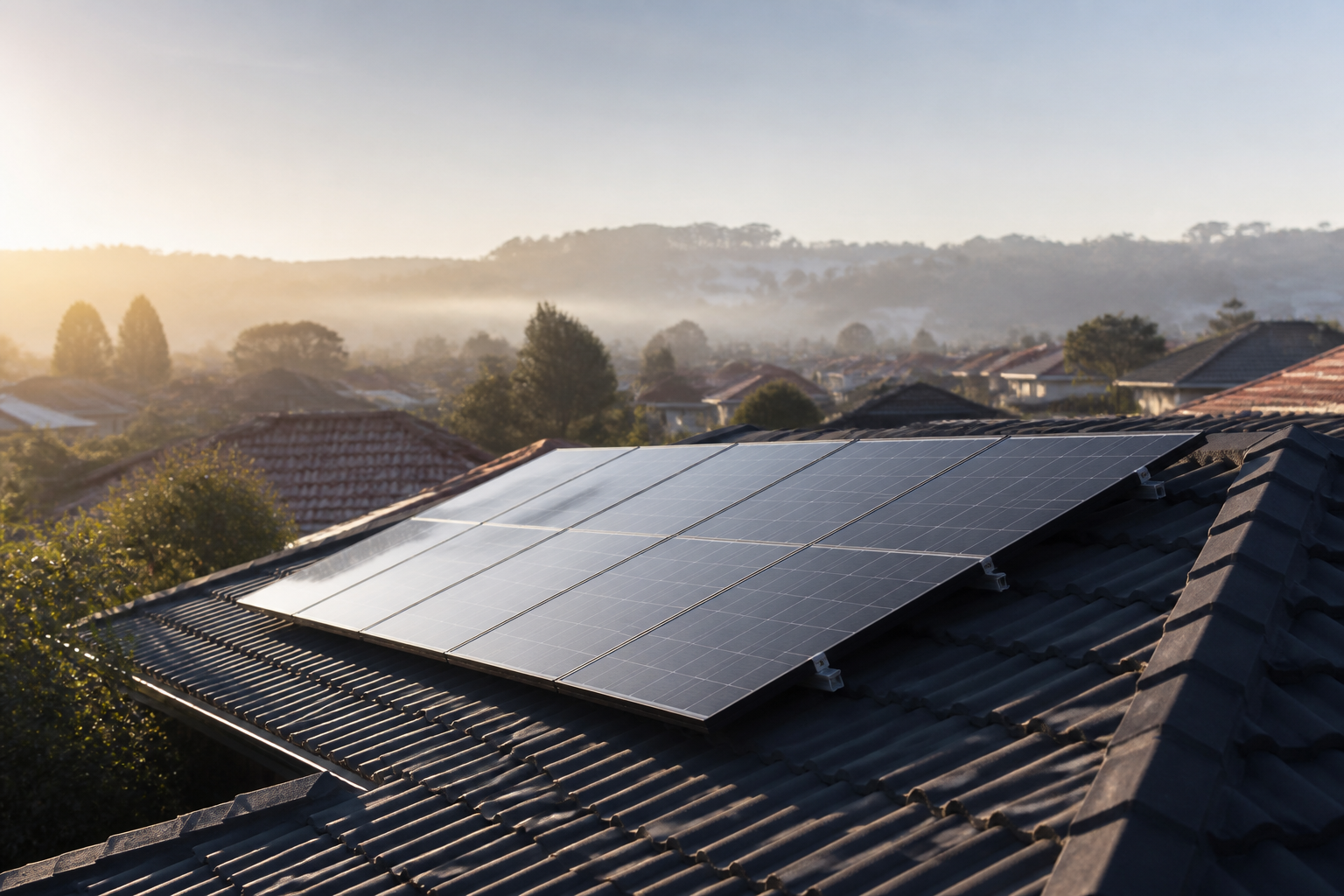
Every winter we field the same worried call: the app shows half the generation it did in January — is something broken? Almost always, no. Winter output drops for predictable, physical reasons, and a well-designed system has already priced that into its payback. Understanding why makes the numbers much less alarming.
Three things winter changes
First, days are shorter. Melbourne gets around nine and a half hours of daylight in late June against more than fourteen and a half in December — a third less time for panels to work with. Second, the sun sits lower in the sky, so light strikes your panels at a shallower angle and spreads across more atmosphere on the way down, thinning its intensity. Third, there is simply more cloud. Stack the three together and a system producing 28 kWh on a clear summer day might average 8 to 12 kWh across a winter week.
One thing winter actually improves
Here is the counterintuitive part: solar panels are more efficient when cold. Panel output ratings assume 25°C cell temperature, and every degree above that shaves a little off performance. On a crisp, clear winter morning, cold cells and clean air can produce surprisingly strong output for the available light. Winter has fewer hours, not worse panels.
The annual view is what pays your bills
Solar economics were never built on July. A north-facing system in Victoria delivers the large majority of its annual energy between September and April, and the payback calculation on any honest quote uses the full-year average — around 3.6 to 4 kWh per day for each kilowatt installed. Winter's dip is already in that number. What matters is that your system hits its expected annual total, which your monitoring app can confirm.
Getting more from the shorter days
You can still work winter harder. Run the dishwasher, washing machine and any pool equipment in the middle of the day when generation peaks. If your hot water runs on a timer, keep its heating window in daylight hours. And winter is the season shading problems reveal themselves — the low sun drags long shadows from trees and aerials that summer never shows. If your app displays a sharp midday dip that was not there before, that is worth a look rather than a shrug.
When a drop is a fault
Season-shaped decline is normal; a flatline is not. If generation sits at zero, or clear-day output is dramatically below last winter's clear days, check the inverter for a fault light and call your installer. Fortune Power customers can send us a screenshot of the app and we will tell you quickly whether you are looking at physics or a problem worth a service visit.