
Solar
String vs Microinverters: Which Suits Your Roof?
The inverter decision shapes how your solar system handles shade, monitoring and future upgrades. Here is how to choose between the two main designs.
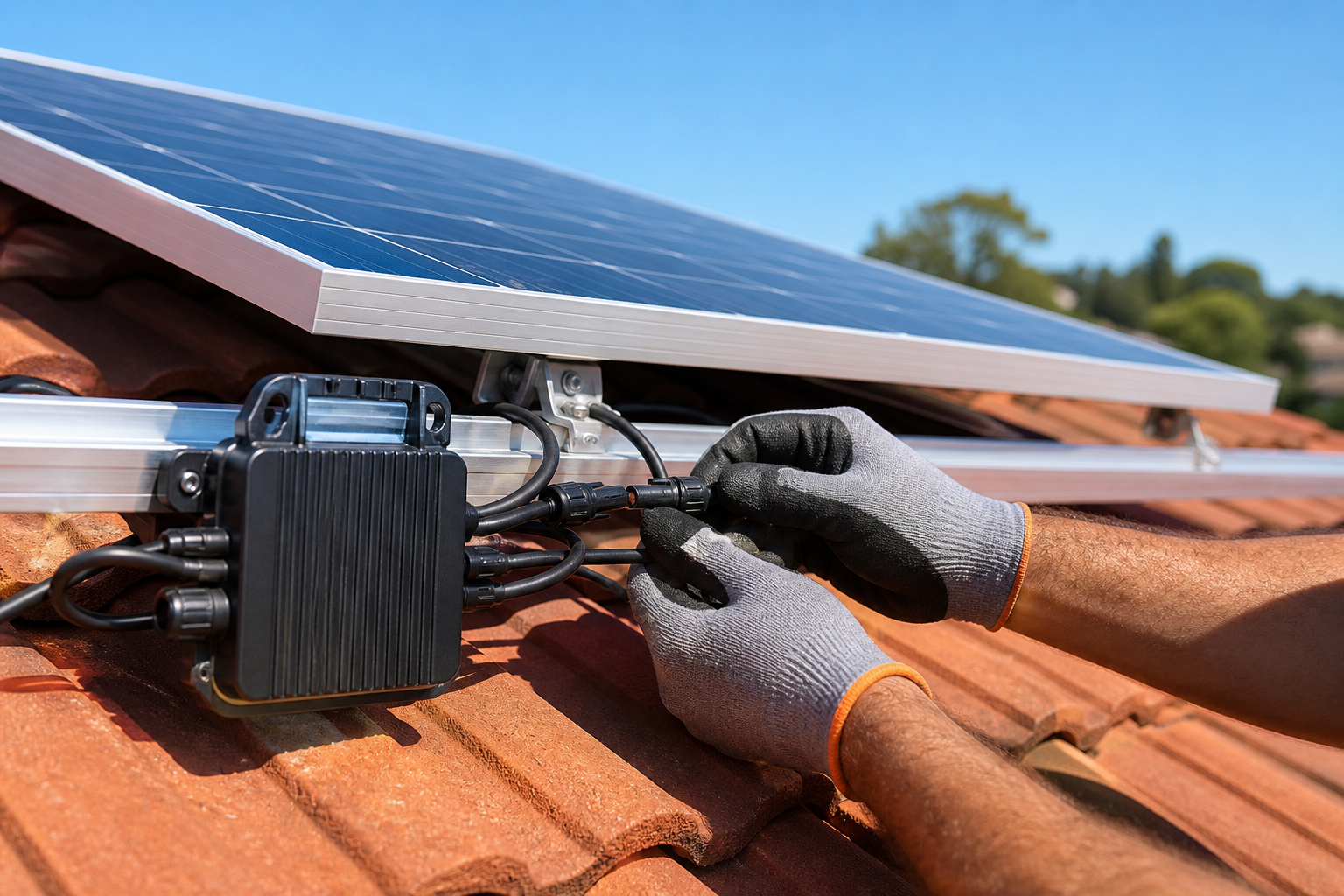
Panels get all the attention, but the inverter is the component doing the hard work — converting the DC power your roof produces into the AC power your home runs on. There are two main ways to do that job, and the right choice depends far more on your roof than on any brochure.
How a string inverter works
A string system wires your panels together in a series — a string — and feeds the combined output into one inverter, usually mounted on a wall near your switchboard. It is the mature, proven design: fewer components, straightforward servicing, and typically the lowest cost per kilowatt. For a simple roof with one or two unshaded faces pointing the right way, a quality string inverter is hard to beat on value.
The catch is that a string behaves like a team roped together. If one panel drops its output — a chimney shadow at 3pm, a patch of leaf litter, a passing antenna shadow — the whole string can be dragged down with it. On a clean, open roof this rarely matters. On a complicated one, it can cost real energy every day.
How microinverters work
Microinverters flip the design: a small inverter sits under each panel and converts power right there on the roof. Every panel operates independently, so a shaded corner only affects that one panel. You also get panel-by-panel monitoring, which makes faults obvious instead of hidden inside a string average, and adding a few panels later is simpler because there is no string sizing to rework.
The trade-offs are honest ones: microinverters cost more upfront, and the electronics live on the roof where summer heat works hardest. Quality units carry long warranties for exactly that reason, but the price gap is real and worth weighing.
What we look at on your roof
When Fortune Power assesses a home, three things steer the inverter recommendation. First, shade: trees, neighbouring two-storey builds, aerials and flues. Second, roof complexity: multiple orientations and small roof faces favour panel-level electronics, while one big north face favours a string. Third, your plans: if a battery is likely within a few years, certain inverter platforms make that upgrade cleaner and cheaper.
There is also a middle path worth knowing about — DC optimisers, which pair a string inverter with small panel-level devices to get much of the shade tolerance without the full microinverter cost.
The bottom line
Neither design is universally better. A simple sunny roof usually gets the best return from a good string inverter; a shaded or multi-faced roof usually justifies microinverters or optimisers. Ask your installer to explain the recommendation in terms of your actual roof — and if they quote one design for every house they see, get a second opinion.