
Solar
Preparing Your Home Solar for an Electric Vehicle
An EV can double your household electricity use — or cost almost nothing to run if your solar is set up for it. Plan the pieces before the car arrives.
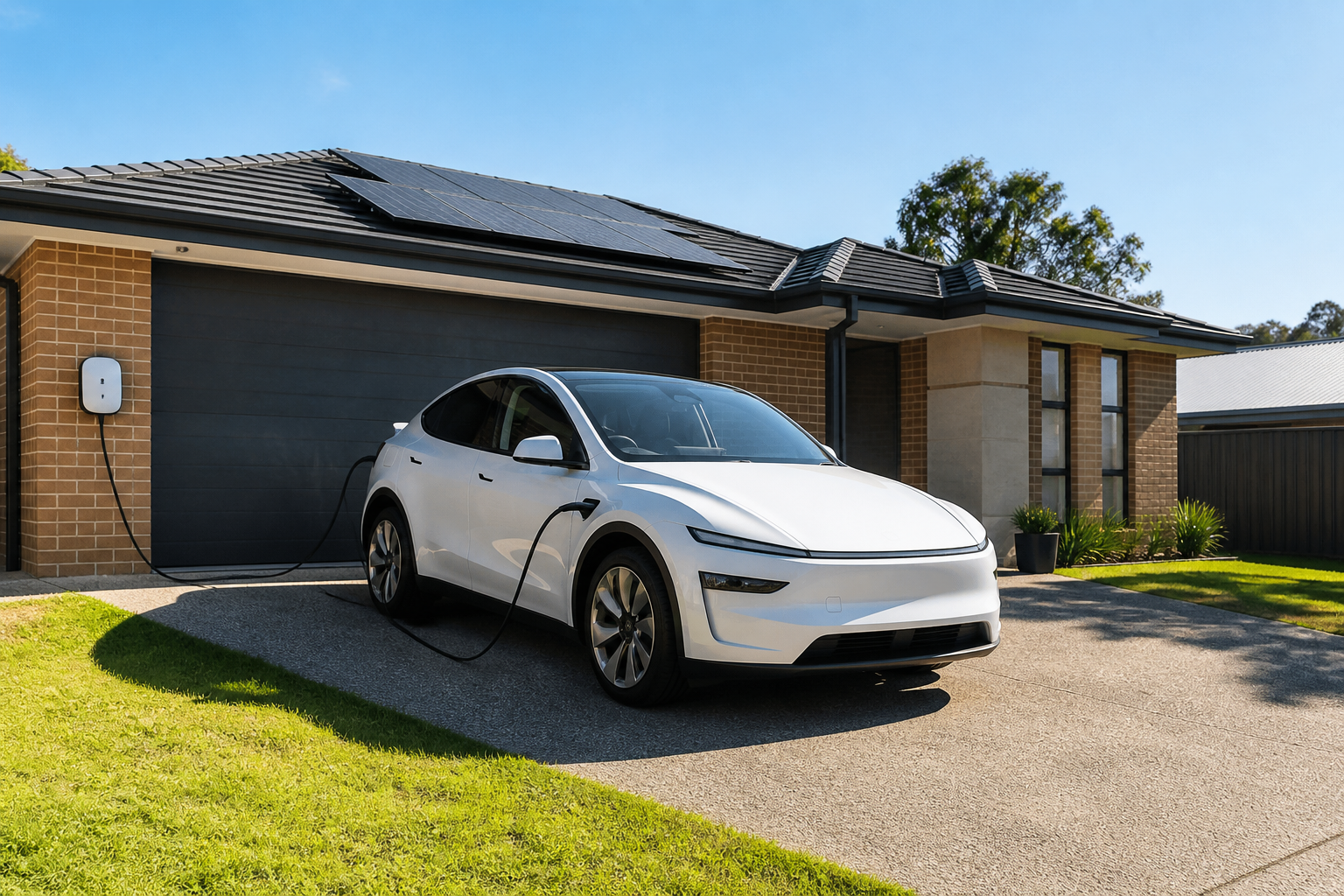
An electric vehicle changes your household energy picture more than any other purchase. A typical Australian driver covering 12,000 km a year needs roughly 2,000 kWh of charging — often a 30 to 50 per cent jump in home electricity use. Handled badly, that lands on your bill at peak rates. Handled well, most of it can come straight off your roof.
Charging speeds, in plain English
Every EV can trickle-charge from a normal power point at around 10 to 15 km of range per hour — fine as a stopgap, slow as a lifestyle. A dedicated wall charger on its own circuit delivers roughly 40 to 50 km of range per hour on a single-phase home, which means even a near-empty battery refills overnight or across a sunny day. For most households that is the sweet spot; public fast chargers can cover the rare long trip.
Will your solar keep up?
Here is the practical question: can your panels charge the car and run the house at the same time? A 6.6 kW system generating strongly through the middle of the day can feed a charger dialled down to match solar output, with the house running on the remainder. If your system is smaller, or the car is only home on weekends, you have choices — charge on a cheap overnight tariff, add panels, or both. This is exactly the modelling worth doing before you commit, because adding capacity at install time is far cheaper than retrofitting.
Solar-aware chargers earn their keep
The most useful upgrade for solar households is a charger that tracks your export in real time and adjusts its rate to soak up only surplus energy. Instead of exporting at a few cents per kilowatt-hour, you bank that energy as driving range — effectively fuelling the car with sunshine you were about to give away. If the car is home during daylight hours even a few days a week, the savings compound quickly.
Get the electrical basics checked
Before any charger goes in, an electrician should confirm your switchboard has capacity for a new dedicated circuit, check whether your supply is single or three phase, and make sure protection devices meet current standards. Older boards sometimes need an upgrade — better to know that upfront than mid-installation.
Plan once, not twice
If an EV is on your horizon, tell your solar installer now. Fortune Power designs systems with a charging circuit allowed for, panel capacity sized for the extra load, and a clear path to a battery later. A single well-planned install beats two rounds of trades every time — and it means the day the car arrives, the cheapest fuel in Australia is already on your roof.